

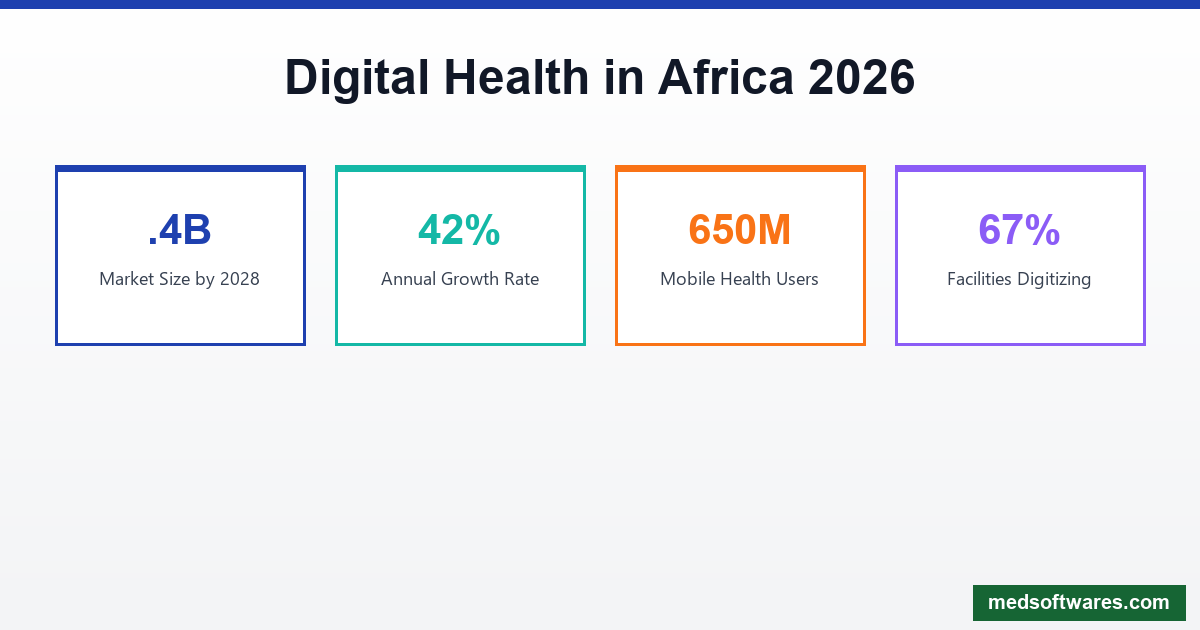
Africa's healthcare sector is experiencing unprecedented digital transformation. With a projected market size of $8.4 billion by 2028 and 42% annual growth, the continent is leapfrogging traditional healthcare infrastructure to embrace innovative digital solutions.
The Digital Health Opportunity in Africa
Market Overview
Growth Statistics:
- $8.4 billion market size projected by 2028
- 42% compound annual growth rate
- 650 million mobile health users
- 67% of facilities actively digitizing
Investment Trends:
- Record venture capital in health tech
- Government digitization initiatives
- International development funding
- Private sector partnerships
Why Africa Is Unique
Leapfrogging Advantage:
- Minimal legacy systems to replace
- Mobile-first population
- Young, tech-savvy workforce
- Innovation-friendly environment
Challenges Create Opportunities:
- Limited specialists drive telemedicine
- Infrastructure gaps drive offline solutions
- Cost constraints drive affordable innovation
- Distance drives mobile health
Key Digital Health Trends for 2026
1. Electronic Health Records (EHR)
Current Adoption:
- 45% of urban hospitals using EHR
- 15% of rural facilities digitized
- Growing cloud adoption
- National health record initiatives emerging
2026 Developments:
- Kenya's integrated health system expansion
- Rwanda's continued digital leadership
- Nigeria's national health ID rollout
- Ghana's interoperability initiatives
What This Means for Facilities:
- Start digitizing now to stay competitive
- Choose systems that support interoperability
- Prepare for national system integration
- Invest in staff digital literacy
2. Telemedicine & Virtual Care
Adoption Rates:
- 78% of urban hospitals offer telemedicine
- 52% of patients tried virtual consultations
- Specialist consultations most common use
- Mental health services growing rapidly
Key Enablers:
- Improved mobile internet coverage
- Regulatory framework development
- Payment integration (mobile money)
- Provider training programs
Challenges Remaining:
- Bandwidth limitations in rural areas
- Digital literacy among patients
- Regulatory uncertainty in some countries
- Insurance coverage for virtual visits
3. Mobile Health (mHealth)
User Statistics:
- 650 million mobile health app users in Africa
- 40% use health apps monthly
- Chronic disease management most popular
- Maternal health apps growing fastest
Popular Applications:
- Appointment booking
- Medication reminders
- Health information access
- Symptom checkers
- Insurance claims
Future Directions:
- AI-powered health assistants
- Wearable device integration
- Remote patient monitoring
- Community health worker support
4. Artificial Intelligence in Healthcare
Current Applications:
- Diagnostic imaging analysis
- Drug interaction checking
- Patient flow optimization
- Fraud detection in insurance
Emerging Uses:
- Clinical decision support
- Predictive analytics
- Natural language processing
- Personalized treatment recommendations
Africa-Specific AI:
- Disease outbreak prediction
- Resource allocation optimization
- Language translation for healthcare
- Agricultural health integration
5. Healthcare Payment Innovation
Mobile Money Dominance:
- M-Pesa Kenya: 32+ million users
- MTN Mobile Money: 60+ million across Africa
- Orange Money: Growing in Francophone Africa
- Airtel Money: Expanding coverage
Healthcare Payment Trends:
- Direct billing to mobile wallets
- Insurance claim integration
- Microinsurance products
- Pay-as-you-go healthcare
Country Spotlight
Kenya
Digital Health Leadership:
- Integrated health information system
- NHIF/SHA digital claims
- Telemedicine regulations in place
- Strong health tech startup ecosystem
Key Initiatives:
- Universal Health Coverage push
- Digital health academy
- County health digitization
- Private sector partnerships
Rwanda
Africa's Digital Pioneer:
- 90%+ health facility digitization
- Drone medical delivery
- AI diagnostic support pilots
- National health exchange
Lessons for Others:
- Government commitment essential
- Start small, scale fast
- Invest in training
- Measure and iterate
Ghana
Growing Digital Ecosystem:
- NHIS electronic claims
- e-Pharmacy initiatives
- Hospital digitization programs
- Health tech incubators
Opportunities:
- Large market potential
- Improving infrastructure
- Supportive regulations
- Growing tech talent
Nigeria
Scale and Potential:
- Largest healthcare market
- Rapid mobile adoption
- Growing investor interest
- Policy improvements
Challenges:
- Infrastructure limitations
- Regulatory complexity
- Security concerns
- Fragmented healthcare system
South Africa
Most Advanced Market:
- High smartphone penetration
- Developed private sector
- Strong tech capabilities
- Regulatory frameworks
Focus Areas:
- Public-private integration
- Rural reach expansion
- AI and analytics
- Cross-border services
Challenges and Solutions
Challenge 1: Infrastructure Limitations
Problems:
- Unreliable internet connectivity
- Power outages
- Hardware availability
- Technical support access
Solutions:
- Offline-first software design
- Solar power integration
- Mobile-optimized applications
- Remote support capabilities
How MedSoftwares Helps: HospitalOS and PharmaPOS work offline, syncing when connected. Solar-compatible low-power requirements.
Challenge 2: Digital Literacy
Problems:
- Staff unfamiliar with technology
- Patient digital divide
- Training resource limitations
- Resistance to change
Solutions:
- Intuitive interface design
- Comprehensive training programs
- Gradual feature rollout
- Multi-language support
How MedSoftwares Helps: Simple, intuitive interfaces with included training. Multi-language support (English, French, Arabic).
Challenge 3: Affordability
Problems:
- High upfront costs
- Ongoing subscription fees
- Hidden implementation costs
- Currency volatility
Solutions:
- One-time pricing models
- Phased implementation
- Local currency billing
- Flexible payment options
How MedSoftwares Helps: One-time pricing starting at $299 (pharmacy) and $799 (hospital). No monthly subscriptions.
Challenge 4: Interoperability
Problems:
- Siloed systems
- No standard data formats
- Integration complexity
- Vendor lock-in
Solutions:
- Open standards adoption
- API-first architecture
- Data portability
- Collaborative ecosystem
Challenge 5: Data Security
Problems:
- Cyber threats increasing
- Regulatory compliance
- Patient privacy concerns
- Limited security expertise
Solutions:
- Encryption by default
- Role-based access control
- Regular security updates
- Compliance frameworks
Implementation Roadmap
Phase 1: Foundation (Month 1-2)
Assessment:
- Current state analysis
- Stakeholder identification
- Requirements gathering
- Budget planning
Planning:
- System selection
- Implementation timeline
- Training schedule
- Success metrics
Phase 2: Core Systems (Month 3-4)
Priority Systems:
- Patient registration
- Electronic health records
- Billing and payments
- Inventory management
Quick Wins:
- Appointment scheduling
- Basic reporting
- Digital receipts
- Stock tracking
Phase 3: Advanced Features (Month 5-6)
Expansion:
- Telemedicine capabilities
- Advanced analytics
- Insurance integration
- Department-specific modules
Integration:
- National health systems
- Laboratory interfaces
- Pharmacy networks
- Payment providers
Phase 4: Optimization (Ongoing)
Continuous Improvement:
- User feedback integration
- Process refinement
- Additional training
- Feature expansion
Measurement:
- Track KPIs
- Benchmark against goals
- Identify gaps
- Plan enhancements
Success Stories
Community Hospital, Ghana
Challenge: Paper records, manual billing, no insurance integration
Solution: HospitalOS implementation
Results:
- 80% reduction in patient wait times
- 100% NHIS claims capture
- 60% reduction in billing errors
- 40% improvement in revenue collection
Independent Pharmacy, Kenya
Challenge: Manual inventory, cash-only payments, frequent stockouts
Solution: PharmaPOS implementation
Results:
- Zero stockouts on critical medications
- M-Pesa increased revenue 35%
- Inventory accuracy improved to 98%
- 50% reduction in expired products
MedSoftwares: Built for Africa
Our solutions are designed specifically for African healthcare realities:
Why Choose Us
1. Offline-First Architecture
- Work without internet
- Automatic sync when connected
- No data loss during outages
- Low bandwidth requirements
2. Mobile Money Integration
- M-Pesa, MTN, Vodafone, Airtel
- Real-time payment confirmation
- Automatic reconciliation
- No integration fees
3. Local Insurance Support
- NHIS Ghana
- NHIF/SHA Kenya
- Private insurers
- Corporate schemes
4. Affordable Pricing
- One-time license fee
- No monthly subscriptions
- No per-transaction fees
- Includes training and support
5. Regional Support
- Local support teams
- Regional phone numbers
- Multiple time zones
- Local language support
Getting Started
Ready to digitize your healthcare facility?
Step 1: Assess Your Needs
- What systems do you need?
- What's your budget?
- What are your biggest pain points?
- What are your growth plans?
Step 2: Request a Demo
Contact us to see:
- Offline capabilities in action
- Mobile money integration
- Insurance claims processing
- Reporting dashboards
Step 3: Plan Your Implementation
We'll help you:
- Create implementation timeline
- Configure for your needs
- Train your staff
- Go live successfully
Conclusion
Digital health transformation in Africa isn't just an opportunity—it's an imperative. With $8.4 billion projected market size and 42% growth, facilities that don't digitize risk being left behind.
HospitalOS and PharmaPOS provide:
- Offline-first design for reliable operations
- Mobile money integration for local payments
- Insurance support for NHIS, NHIF, and more
- Affordable one-time pricing from $299
Join the digital health revolution.


