

Healthcare-associated infections (HAIs) remain one of the most significant patient safety challenges worldwide. In the United States alone, approximately 1 in 31 hospital patients contracts at least one HAI on any given day, resulting in tens of thousands of preventable deaths and billions of dollars in excess healthcare costs annually. Infection control software has become indispensable for hospitals seeking to reduce infection rates, comply with regulatory reporting requirements, and protect both patients and healthcare workers.
In 2026, hospital infection prevention technology has advanced dramatically — leveraging real-time surveillance, AI-driven outbreak detection, automated NHSN reporting, and integrated antimicrobial stewardship programs. This guide provides a comprehensive overview of infection control software capabilities, leading platforms, and implementation strategies for healthcare organizations of all sizes.
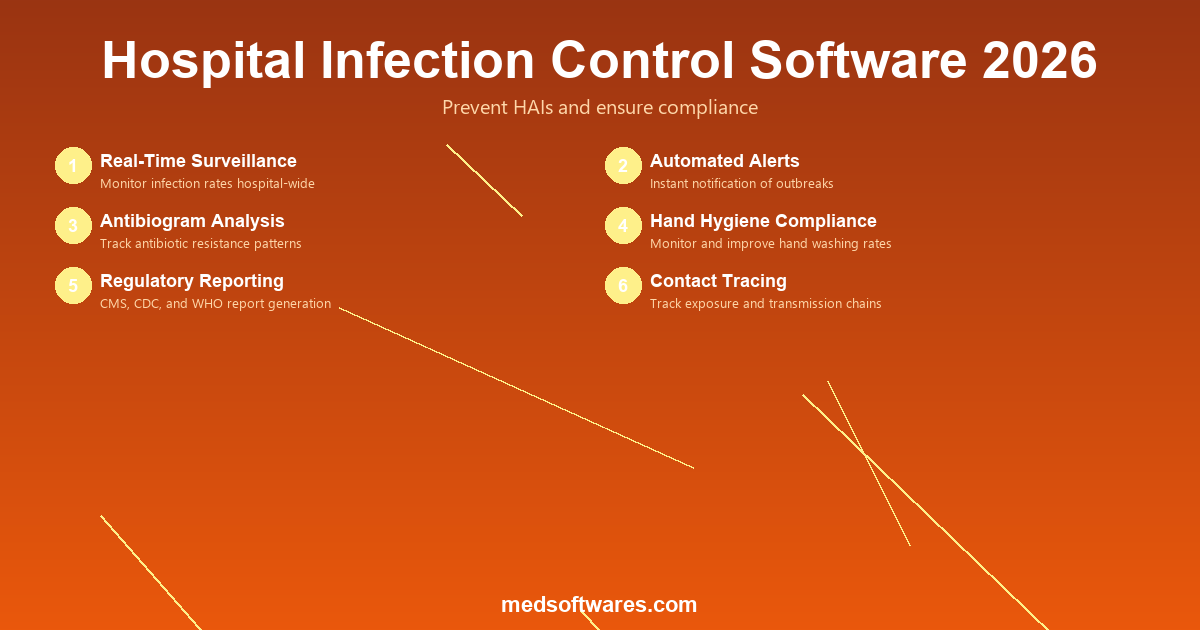
Quick Comparison: Top Infection Control Platforms 2026
| Feature | Wolters Kluwer (ICNet) | BD HealthSight | Vigilanz | RL Datix | HospitalOS IPC Module | |---|---|---|---|---|---| | HAI Surveillance | Advanced | Advanced | Strong | Moderate | Integrated | | Antibiogram Tracking | Yes | Yes | Yes | Limited | Yes | | Hand Hygiene Monitoring | Integration | Built-in | Integration | Limited | Built-in | | Outbreak Management | Advanced | Strong | Strong | Moderate | Integrated | | Antimicrobial Stewardship | Yes | Yes | Advanced | Limited | Yes | | NHSN Reporting | Automated | Automated | Automated | Semi-auto | Automated | | Isolation Management | Yes | Yes | Yes | Yes | Yes | | Real-Time Alerts | Yes | Yes | Yes | Limited | Yes | | AI/ML Analytics | Yes | Yes | Yes | Limited | Yes | | Pricing | $$$$ | $$$$ | $$$ | $$ | $$ |
Understanding Healthcare-Associated Infections
Types of HAIs Tracked by Infection Control Software
Hospital infection prevention programs monitor several categories of infections:
| HAI Category | Common Organisms | Surveillance Method | Impact | |---|---|---|---| | CLABSI (Central Line-Associated Bloodstream Infection) | Staphylococcus, Enterococcus, Candida | Line day tracking, blood culture monitoring | Mortality 12-25%, Cost $48,000/case | | CAUTI (Catheter-Associated Urinary Tract Infection) | E. coli, Klebsiella, Enterococcus | Catheter day tracking, urine culture monitoring | Cost $13,000/case | | SSI (Surgical Site Infection) | S. aureus, coagulase-negative staph | Procedure tracking, wound surveillance | Readmission rates 2-11x higher | | VAE (Ventilator-Associated Event) | Pseudomonas, Acinetobacter, MRSA | Ventilator day tracking, clinical criteria | Mortality 20-50%, ICU LOS +7 days | | C. difficile | Clostridioides difficile | Lab-based surveillance | Recurrence 15-30%, Cost $24,000/case | | MRSA Bacteremia | Methicillin-resistant S. aureus | Blood culture monitoring | Mortality 15-50% | | Hand Hygiene Compliance | N/A (prevention metric) | Direct observation, electronic monitoring | Each 10% improvement reduces HAIs by 6% |
The Cost of HAIs
Understanding the financial impact underscores the value of investing in HAI tracking software:
- Total annual cost of HAIs in the US: $28-$45 billion
- Average cost per HAI case: $13,000-$48,000 depending on type
- CMS penalty for excess HAIs: Up to 1% reduction in Medicare reimbursement
- Malpractice and litigation costs: Significant exposure for preventable infections
- Reputation damage: Patient safety grades publicly reported on Hospital Compare
Core Features of Infection Control Software
HAI Surveillance
The foundation of any infection surveillance system is comprehensive, real-time monitoring:
Automated Case Detection:
- Lab result integration — automatic flagging of positive cultures and sensitivity results
- Clinical criteria application — system evaluates NHSN definitions against patient data
- Denominator calculation — automated tracking of device days, patient days, and procedure counts
- Risk stratification — adjusting rates based on patient acuity, unit type, and procedure complexity
- Trend analysis — statistical process control charts identifying rate changes over time
Surveillance Workflow:
- Lab system detects positive culture and sends result to IPC software
- System evaluates result against NHSN surveillance definitions
- Alert generated for infection preventionist (IP) review
- IP reviews clinical data and confirms or rules out HAI
- Confirmed HAI is classified and attributed to appropriate unit/procedure
- Data feeds into dashboards, reports, and NHSN submission
Surveillance Dashboard Metrics:
- Standardized Infection Ratio (SIR) — observed vs. expected infections
- Device utilization ratios — central line, urinary catheter, and ventilator utilization
- Infection rates by unit, organism, and time period
- Antimicrobial resistance patterns tracked over time
- Benchmark comparisons against national and peer group data
Antibiogram Tracking
The antibiogram is a critical tool for guiding empiric antibiotic therapy:
- Automated antibiogram generation from lab data with annual and cumulative views
- Organism-specific susceptibility tracking for all tested antibiotics
- Unit-level antibiograms showing resistance patterns specific to ICU, wards, and outpatient areas
- Trend analysis detecting emerging resistance patterns before they become outbreaks
- Guideline integration linking antibiogram data to empiric therapy recommendations
- CLSI compliance ensuring susceptibility testing follows current standards
- Custom report generation for pharmacy, infectious disease, and medical staff committees
Hand Hygiene Monitoring
Hand hygiene compliance is the single most effective measure for preventing HAIs:
Monitoring Methods:
| Method | Accuracy | Cost | Scalability | Hawthorne Effect | |---|---|---|---|---| | Direct Observation | Gold standard | Low (staff time) | Limited | High | | Electronic Monitoring (Badge-based) | High | High (infrastructure) | Excellent | Low | | Video Monitoring with AI | High | Moderate | Good | Moderate | | Product Usage Tracking | Moderate (indirect) | Low | Excellent | None | | Self-Reporting | Low | Very low | Excellent | N/A |
Best Practices for Hand Hygiene Programs:
- Combine multiple monitoring methods for comprehensive measurement
- Set department-specific compliance targets (typically 80-95%)
- Provide real-time feedback to healthcare workers at the point of care
- Track compliance by role (physician, nurse, technician, environmental services)
- Link compliance data to infection rate outcomes for motivation
- Integrate with recognition programs rewarding high-compliance units
Outbreak Management
When infection clusters are detected, rapid response is critical:
Outbreak Detection:
- Statistical algorithms that detect unusual increases in specific organisms or infection types
- Geospatial mapping showing infection locations within the facility
- Timeline visualization plotting cases chronologically to identify potential transmission events
- Molecular epidemiology integration linking whole-genome sequencing data to epidemiologic findings
- Automated cluster alerts triggered when case counts exceed statistical thresholds
Outbreak Response Workflow:
- System detects cluster through automated surveillance algorithms
- Alert sent to infection prevention team with case details and line listing
- IP team initiates investigation — confirms cases, identifies commonalities
- Environmental assessment and enhanced screening implemented
- Interventions deployed (enhanced cleaning, isolation, screening cultures)
- System tracks ongoing cases to determine if outbreak is controlled
- After-action report generated with lessons learned and process improvements
Outbreak Management Tools:
- Line listing generator compiling all relevant case data in standardized format
- Contact tracing identifying exposed patients, visitors, and healthcare workers
- Communication templates for notifying staff, patients, families, and regulatory agencies
- Intervention tracking documenting actions taken and their effectiveness
- Resolution criteria defining when an outbreak is considered controlled
Antimicrobial Stewardship
Antimicrobial stewardship programs (ASPs) are now regulatory requirements for hospitals. Infection control software supports stewardship through:
Prospective Audit and Feedback:
- Real-time antimicrobial order review flagging inappropriate therapy choices
- Duration-of-therapy tracking alerting when antibiotics exceed recommended treatment duration
- Spectrum appropriateness scoring evaluating whether the selected antibiotic matches the identified organism
- De-escalation prompts recommending narrower-spectrum agents when culture results are available
- IV-to-oral conversion alerts identifying patients eligible to switch from intravenous to oral antibiotics
Antimicrobial Usage Metrics:
| Metric | Description | Target | |---|---|---| | Days of Therapy (DOT) | Antimicrobial days per 1,000 patient days | Trend downward | | Defined Daily Dose (DDD) | Standardized consumption measurement | Below benchmark | | Length of Therapy (LOT) | Duration of antimicrobial courses | Within guidelines | | Time to Appropriate Therapy | Hours from culture to effective antibiotic | Under 24 hours | | De-escalation Rate | Percentage of cases narrowed after culture | Above 60% | | IV-to-Oral Conversion Rate | Percentage converted when eligible | Above 70% |
Stewardship Decision Support:
- Empiric therapy guidelines based on local antibiogram data
- Drug-bug mismatch alerts when prescribed antibiotics do not cover identified organisms
- Restricted antibiotic approval workflows requiring ID physician authorization
- Cost analysis comparing antimicrobial spending to clinical outcomes
- Education modules for prescribers on appropriate antibiotic use
NHSN Reporting
The National Healthcare Safety Network (NHSN) is the CDC's surveillance system for tracking HAIs. Automated reporting is essential:
- Automated data extraction from clinical systems into NHSN-compatible formats
- CDA (Clinical Document Architecture) generation for electronic NHSN submission
- Denominator data automation eliminating manual counting of device days and patient days
- Validation checks ensuring data quality before submission
- Submission tracking confirming successful uploads to NHSN
- SIR calculation providing real-time performance against national benchmarks
- CMS Hospital-Acquired Condition Reduction Program data preparation
Isolation Management
Proper isolation is critical for containing infectious organisms:
- Isolation order tracking with precaution type (contact, droplet, airborne, protective)
- Room assignment optimization placing isolation patients in appropriate rooms
- Signage automation generating digital or printable isolation signs with PPE requirements
- Supply chain integration ensuring isolation rooms are stocked with appropriate PPE
- Discontinuation criteria alerting when isolation can be safely removed based on clinical data
- Contact tracing integration identifying roommates and other contacts of isolated patients
- Compliance monitoring tracking adherence to isolation precautions by healthcare workers
Environmental Monitoring and Cleaning
Infection control software increasingly integrates with environmental services:
- UV disinfection tracking documenting enhanced terminal cleaning procedures
- ATP bioluminescence monitoring recording surface cleanliness test results
- Room turnover tracking ensuring adequate cleaning time between patients
- Water management monitoring Legionella prevention programs
- Construction risk assessment managing infection risks during renovation and construction
- Air handling monitoring tracking HEPA filtration and air exchange rates in isolation rooms
Regulatory Compliance and Accreditation
Key Regulatory Requirements
| Regulation/Standard | Agency | Key Requirements | |---|---|---| | CMS Conditions of Participation | CMS | Active surveillance, antibiotic stewardship, reporting | | NHSN Reporting | CDC | Mandatory HAI reporting for acute care hospitals | | HAC Reduction Program | CMS | Financial penalties for excess HAIs | | Joint Commission Standards | TJC | IPC program, hand hygiene, antibiotic stewardship | | State Reporting Laws | State DOH | Varies — many states require public reporting | | OSHA Bloodborne Pathogen Standard | OSHA | Exposure prevention and post-exposure management | | DNV GL Standards | DNV | Risk-based IPC program, surveillance requirements |
Preparing for Surveys and Audits
Infection control software should help organizations prepare for regulatory surveys:
- Survey readiness dashboards showing compliance status across all IPC requirements
- Policy and procedure repository with version control and staff acknowledgment tracking
- Education tracking documenting staff training on infection prevention topics
- Corrective action plans with follow-up tracking for identified deficiencies
- Benchmarking reports demonstrating performance improvement over time
Emerging Technologies in Infection Control
AI and Machine Learning
Artificial intelligence is transforming infection surveillance systems:
- Predictive models identifying patients at high risk for developing HAIs before infection occurs
- Natural language processing extracting infection-relevant data from unstructured clinical notes
- Image recognition analyzing wound photos for early signs of surgical site infection
- Genomic analysis supporting rapid pathogen identification and resistance prediction
- Automated literature surveillance monitoring emerging infectious disease threats globally
Real-Time Location Systems (RTLS)
RTLS technology provides precise tracking capabilities:
- Automated hand hygiene monitoring using badge-based proximity detection
- Contact tracing identifying all healthcare workers who entered an infected patient's room
- Equipment tracking ensuring shared devices are properly cleaned between patients
- Patient flow visualization identifying potential transmission pathways
Whole-Genome Sequencing (WGS)
WGS is becoming a standard tool for outbreak investigation:
- High-resolution pathogen typing determining whether isolates are from a common source
- Resistance gene identification predicting antimicrobial susceptibility from genetic data
- Transmission pathway mapping reconstructing how an organism spread through a facility
- Turnaround time improvements with results now available in 24-48 hours
How to Choose the Right Infection Control Software
Assessment Questions
- Surveillance scope: Does the system cover all HAI types your facility must report?
- Integration capabilities: Can it receive data from your lab, EHR, ADT, and pharmacy systems?
- NHSN reporting: Does it automate the full NHSN reporting workflow including CDA generation?
- Antimicrobial stewardship: Are stewardship tools included or available as a module?
- User experience: Is the interface designed for infection preventionists, or is it adapted from another purpose?
- Scalability: Can it support single-facility or multi-facility deployments?
- Analytics: Does it provide SPC charts, SIR calculations, and benchmark comparisons?
- Support: Does the vendor employ infection prevention specialists who understand clinical workflows?
Implementation Considerations
- Data migration: Plan for transferring historical surveillance data to the new system
- Interface development: Budget time for lab, ADT, and pharmacy interface setup and testing
- Staff training: Infection preventionists, stewardship pharmacists, and IT staff all require training
- Validation period: Run the new system in parallel with existing processes for 3-6 months
- Governance: Establish a multidisciplinary IPC committee to oversee system configuration and workflows
Why Consider HospitalOS and MedSoftwares
HospitalOS includes a comprehensive infection prevention and control module that integrates directly with its hospital management system. This native integration eliminates the data silos that undermine infection surveillance in organizations using standalone IPC software.
Key infection control capabilities in HospitalOS include:
- Automated HAI surveillance with real-time lab result integration and NHSN definition-based case detection
- Antibiogram generation with facility-wide and unit-level views updated in real time
- Hand hygiene monitoring with electronic tracking and compliance reporting by unit and role
- Outbreak detection and management with statistical alerting, line listing, and investigation workflows
- Antimicrobial stewardship with prospective audit, de-escalation prompts, and usage tracking
- NHSN automated reporting with CDA generation and submission tracking
- Isolation management with precaution ordering, room assignment, and compliance monitoring
- Affordable pricing making enterprise-grade IPC technology accessible to hospitals of all sizes
PharmaPOS complements infection control efforts with antimicrobial dispensing data, enabling stewardship teams to track antibiotic usage patterns at the pharmacy level and correlate prescribing trends with resistance data.
Protect your patients and your organization from HAIs. Contact MedSoftwares today to learn how our integrated infection control solution can strengthen your infection prevention program.


